
Emergency
No Heat in Your NYC Apartment? Know Your Rights & First Steps
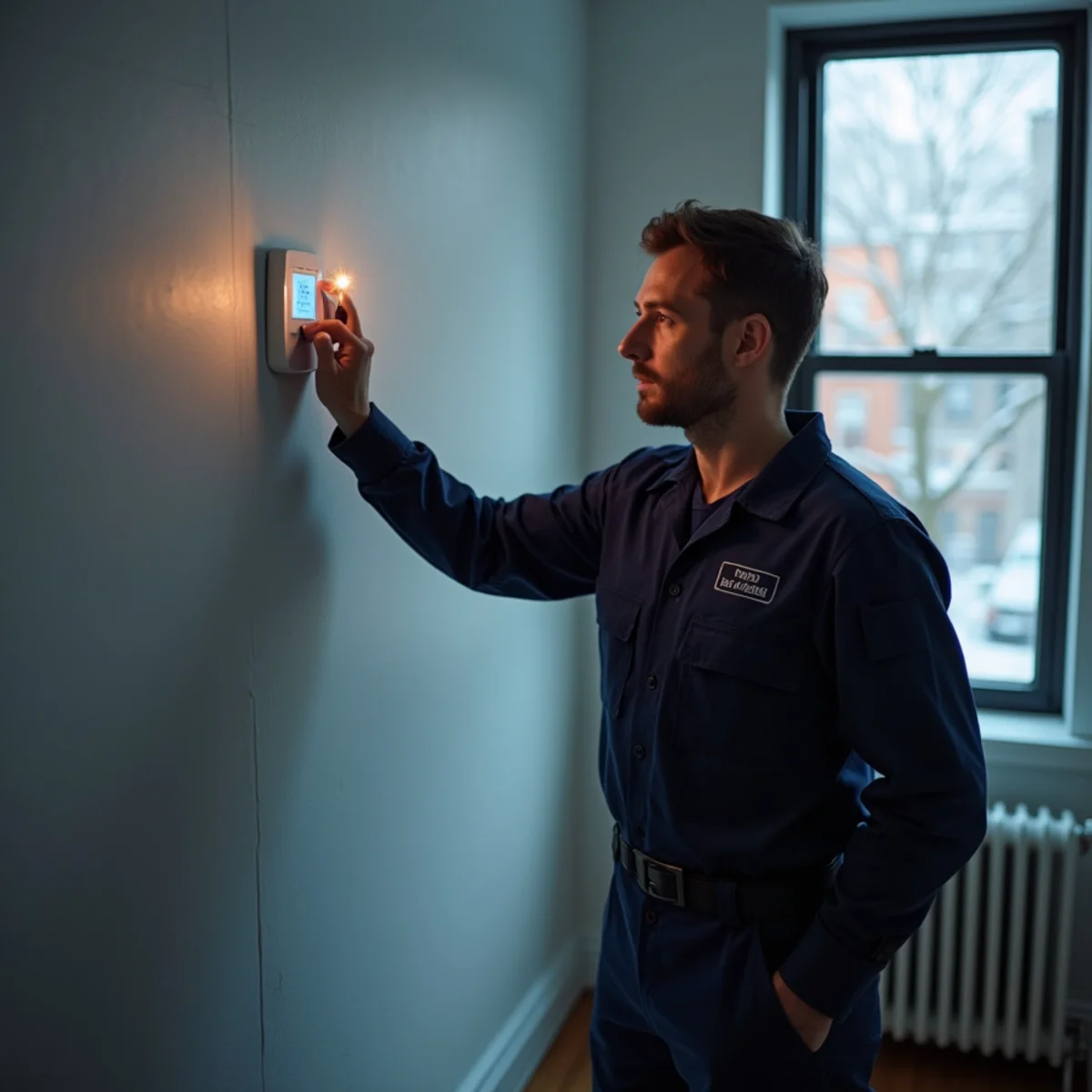
If you have ever woken up to a freezing apartment in January and wondered whether your landlord is actually breaking the law, the answer is very likely yes. New York City has some of the strictest heat laws in the country, and most tenants have no idea how specific those rules really are.
We field calls about "no heat" complaints every winter across Queens and the wider NYC metro, and the pattern is almost always the same: a boiler quietly fails, the landlord drags their feet, and tenants suffer through days of cold before anyone calls a licensed contractor. Knowing your rights — and the practical steps that actually get heat restored fast — makes a real difference.
The NYC Heat Law, in Plain English
New York City's Housing Maintenance Code sets a legal "heat season" that runs from October 1 through May 31. During that window, owners of residential buildings are required to maintain specific indoor temperatures whenever the outdoor temperature drops below certain thresholds.
- Daytime (6 a.m.–10 p.m.): if the outdoor temperature falls below 55°F, indoor temperature must be at least 68°F.
- Nighttime (10 p.m.–6 a.m.): indoor temperature must be at least 62°F, regardless of the outdoor reading.
- These minimums apply to every residential unit, not just some units in a building.
- The rule applies to owners of multi-family buildings — it is a legal obligation, not a courtesy.
Outside of heat season, there is no legally mandated minimum temperature, but most leases and basic habitability standards still obligate landlords to maintain a working heating system year-round for when it is needed.
Step One: Document Everything
Before you call anyone, take five minutes to document the problem properly. A timestamped photo of an indoor thermometer reading, alongside a note of the outdoor temperature, is the single most useful piece of evidence you can have if the issue drags on and you need to escalate.
- Buy or borrow an indoor thermometer and place it away from windows and exterior doors.
- Photograph the reading with your phone's camera, which timestamps the image automatically.
- Check and note the outdoor temperature from a weather app at the same time.
- Repeat this at least once during the day and once at night for a few consecutive days if the problem continues.
- Keep a written log with dates, times, and both temperature readings in one place.
Step Two: Notify Your Landlord or Managing Agent in Writing
Call your super or landlord first if it is an emergency, but always follow up in writing — text message or email is fine, as long as it is dated. A written record shows you gave the owner reasonable notice and protects you if the situation needs to go further.
When to Call 311
If your landlord does not respond within a reasonable time — generally the same day for a serious heat outage — you can file a complaint with 311 or through the NYC 311 website. This creates an official record and can trigger a Department of Housing Preservation and Development (HPD) inspection, which carries real consequences for owners who ignore violations.
Step Three: Understand Who Is Responsible for the Fix
In a rental building, the owner is responsible for maintaining the boiler and heating distribution system, and for hiring a licensed contractor to repair it. Tenants generally should not — and legally cannot — hire outside contractors and deduct the cost from rent without following a specific legal process, so document, notify, and escalate rather than trying to arrange repairs yourself.
If you own a co-op or condo unit, or you are a landlord reading this because a tenant just called you, the calculus changes: you need a licensed, insured heating contractor on the phone immediately, not a maintenance man improvising a fix on a 40-year-old cast iron boiler.
Why Landlords Should Not Wait
For building owners, a heat complaint that turns into an HPD violation is expensive and avoidable. Violations can escalate to civil penalties, and repeat or severe violations put the building at risk of more serious legal action. A same-day call to a licensed emergency heating repair company is almost always cheaper than letting the problem sit.
| Stage | Typical Timeframe |
|---|---|
| Emergency dispatch confirmed | Within the hour, 24/7 |
| Technician diagnoses boiler or distribution issue | Same visit |
| Minor repair (igniter, control, circulator pump) | Often same day |
| Major repair (heat exchanger, major leak) | 1–3 days, parts dependent |
| Full boiler replacement if beyond repair | Scheduled project, days to a couple weeks |
What a Licensed Contractor Actually Checks
When our technicians respond to a no-heat call, we do not just look at the boiler in isolation. We check the thermostat and controls, the circulator pumps, the zone valves, the aquastat, gas supply and ignition, and — critically — whether the problem is really the boiler at all or a failed distribution issue like an air-locked radiator or a stuck steam valve.
- Confirm the boiler is receiving power, gas, and water at proper pressure.
- Test ignition and safety controls for lockouts or fault codes.
- Inspect circulator pumps and zone valves for hydronic (heating-repair) systems.
- Check for air in radiators or uneven heat across units, common in older buildings.
- Verify the thermostat and any building automation controls are calling for heat correctly.
Emergency vs. Standard Heating Repair
A true no-heat emergency during heat season — especially overnight or in freezing weather — should always be treated as urgent. Our emergency heating repair team runs 24/7 specifically because boilers do not fail on a convenient schedule, and a delay of even one night can mean burst pipes on top of the original problem.
If your system is producing some heat but underperforming, uneven, or making unusual noises, that is more often a standard heating repair call — still worth booking promptly, since minor issues left alone tend to become full outages during the coldest stretch of winter.
A Note for Queens Renters and Owners
Queens has an enormous mix of building types — pre-war walk-ups, mid-century co-ops, and newer multi-family construction — and heating systems that range from ancient steam boilers to modern hydronic setups. We are a Queens-based, bilingual crew, and a large share of our winter emergency calls come from exactly this kind of building stock, so we know what tends to fail and why.
Now that you know the law is on your side and the practical steps to follow, do not let a cold apartment become a cold week. If you are a tenant, document and notify. If you are an owner or property manager, call J&S HVAC Expert Inc. at (831) 461-3437 — we run 24/7, bilingual, and can usually get a technician on-site the same day to restore heat and get your building back in compliance.
Have a heating or cooling problem in the NYC metro?
J&S HVAC Expert is a licensed, bilingual HVAC contractor serving Queens and the surrounding area 24/7. Call for fast, honest service.
(831) 461-3437