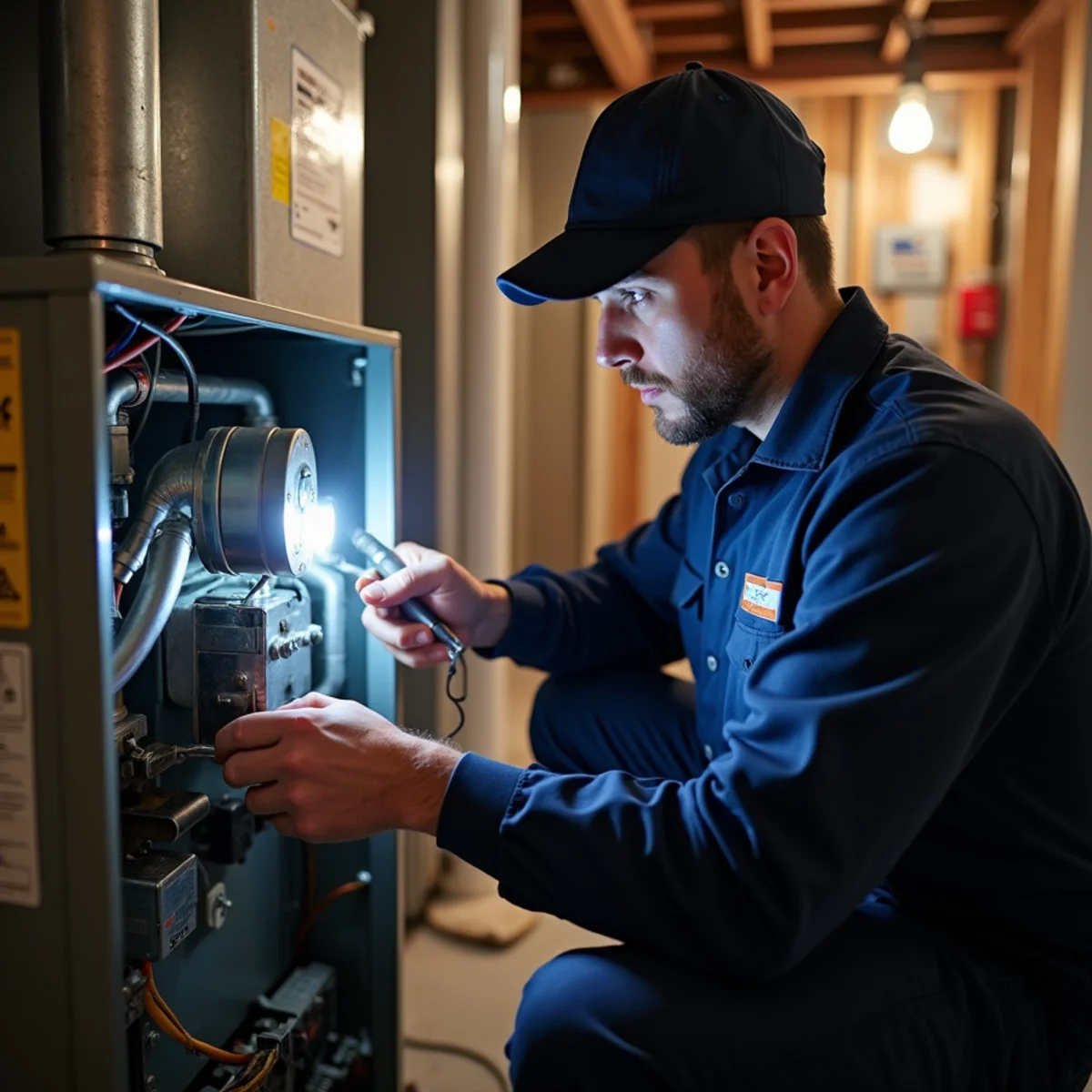
Heating repair in Queens, NY starts with a safety check — testing for gas leaks and carbon monoxide — before we diagnose why the furnace won't heat, from a failed igniter to a cracked heat exchanger, and give you a written estimate. J&S HVAC Expert answers no-heat calls 24/7 and is fully licensed and insured.
A heating system that quits in the middle of a Queens winter is more than an inconvenience — it's a genuine safety concern, and NYC law backs that up. Under the city's Heat Season rules, owners of residential buildings are required to maintain indoor temperatures of at least 68°F during the day and 62°F overnight from October 1 through May 31, and tenants have real legal standing when that isn't happening. J&S HVAC Expert has repaired heating systems across Queens for six years, and we know that a 'no heat' call, whether it's a homeowner with a dead furnace or a tenant whose radiators have gone cold, needs a fast, competent response, not a two-week wait.
Queens' housing stock adds real complexity to furnace and forced-air repair work. Prewar apartment buildings often have heating equipment that's decades old, sometimes retrofitted more than once, with parts that aren't always stocked on a typical service truck. Attached row houses and semi-detached homes frequently have furnaces crammed into tight basement or closet spaces with limited clearance for diagnostics and part replacement. And because forced-air furnaces burn natural gas or oil, safety has to come first — a cracked heat exchanger, a blocked flue, or a malfunctioning ignition system isn't just a comfort problem, it's a carbon monoxide risk that we test for on every no-heat call.
We also see a lot of furnaces that are simply overdue for attention. A system that hasn't been serviced in a year or two accumulates dust on the blower wheel, a dirty flame sensor that causes short-cycling, and a clogged filter that starves airflow and overworks the heat exchanger. These small neglected issues are often what turns a minor repair into a full system failure on the coldest night of the year. Our approach is to fix what's broken today while flagging what's likely to break next, so you're not caught off guard mid-winter.
Ready to book? Get a free, no-pressure estimate.
Signs Your Furnace or Heating System Needs Repair
- Furnace won't turn on, or the pilot light won't stay lit
- Blowing cold or lukewarm air instead of heat
- Frequent cycling on and off before reaching set temperature
- Strange smells — burning dust, gas odor, or a sharp chemical smell from the unit
- Loud banging, popping, or squealing when the system starts or runs
- Rooms heating unevenly, with some areas noticeably colder
- Thermostat unresponsive or heating system ignoring temperature settings
- Rising gas or electric bills without a change in household usage
What's Included in Our Heating & Furnace Repair
Every heating repair visit with J&S includes the following.
- Carbon monoxide and gas leak safety check
- Full diagnostic of ignition system, blower motor, flame sensor, and control board
- Heat exchanger and flue inspection for cracks or blockages
- Written, itemized estimate before repair work begins
- Repair or replacement of the failed component with matched parts
- Post-repair heat output and temperature rise verification
- Combustion safety re-check after the repair
- Preventive recommendations to avoid a repeat failure
Our Heating & Furnace Repair Process
Heating repair calls move fast because a cold house is urgent, but we never skip safety checks to save time.
- 1
Safety & Carbon Monoxide Check
Before anything else, we test for gas leaks and carbon monoxide, and inspect the heat exchanger and flue for cracks or blockages. Safety issues are addressed immediately, even before comfort repairs begin.
- 2
Full System Diagnostic
We check the ignition system, thermocouple or hot surface igniter, blower motor, flame sensor, filter, and control board to pinpoint exactly why the system isn't heating properly.
- 3
Clear Explanation & Estimate
We walk you through what's failing, why it matters, and what it will cost to fix — in English or Spanish — before any repair work begins.
- 4
Repair or Component Replacement
We replace failed igniters, flame sensors, blower motors, capacitors, or control boards with parts matched to your furnace's make and model, restoring safe and reliable operation.
- 5
Heat Output & Safety Verification
After the repair, we run a full heating cycle, verify supply-air temperature rise, confirm proper flue draft, and re-check for any combustion safety issues.
- 6
Preventive Recommendations
We flag any aging components likely to fail soon and recommend a maintenance schedule so you're not facing another no-heat emergency next season.
What Affects the Cost
Heating repair costs depend on the specific failure, fuel type, and system age. The ranges below are non-binding planning estimates based on typical Queens service calls.
- Fuel type — gas, oil, or electric forced-air systems have different parts and labor requirements
- Specific failed component — an igniter is a modest repair, a heat exchanger replacement is major
- System age and whether replacement parts are still manufactured or must be sourced specially
- Access difficulty in tight basements, closets, or crawlspaces common in Queens row houses
- Whether ductwork repairs or modifications are needed alongside the furnace repair
- Urgency — after-hours or peak winter-storm demand affects scheduling
- Whether a full safety inspection or carbon monoxide remediation is required
- Warranty coverage status on the unit or a prior repair
Please note: Most furnace and heating repairs in Queens run roughly $200–$900. This is a planning estimate only — final pricing is confirmed in writing after diagnosis.
Why Queens Residents Trust J&S HVAC Expert
- 24/7 availability for no-heat emergencies, including overnight and weekend calls
- Licensed, insured technicians trained in gas and combustion safety
- Bilingual service in English and Spanish for homeowners, tenants, and landlords alike
- Straightforward pricing with no surprise charges after the estimate
- Experience with the aging heating equipment common in Queens prewar and postwar buildings
- Honest guidance on repair versus replacement, based on your system's real condition
- Locally owned business that shows up when it says it will
Heating & Furnace Repair Across Queens & the NYC Metro
We provide heating & furnace repair throughout the areas below — and many more.