
Emergency
Boiler Down in Winter? What Queens Building Owners Should Do
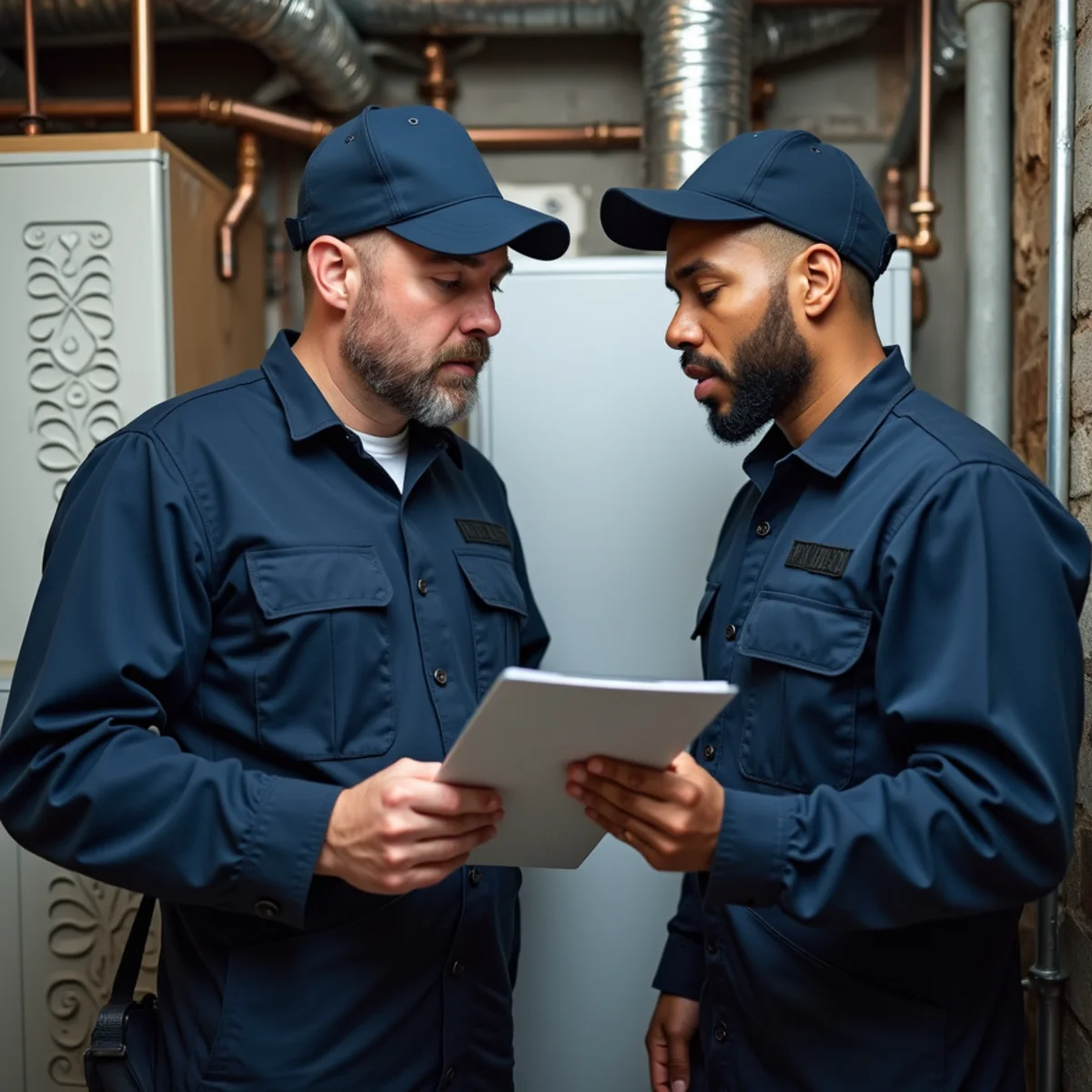
A dead boiler in July is an inconvenience. A dead boiler in a Queens multi-family building in January is a five-alarm problem — tenants are cold, pipes are at risk of freezing, and the clock on your legal obligations is running whether you are ready or not.
We have handled enough emergency boiler repair calls across Queens and Brooklyn to know that owners who follow a clear, calm sequence get their building back to normal fastest, while owners who freeze up (understandably) tend to make the situation worse. Here is the sequence we recommend.
First 15 Minutes: Safety and Triage
- Check for obvious hazards — gas smell, visible flooding, or a tripped emergency shutoff. If you smell gas, evacuate the boiler room and call your gas utility's emergency line before doing anything else.
- Check the boiler's control panel for an error or lockout code and note it — technicians can often narrow down the problem before arriving if you can describe the code.
- Check the low-water cutoff and pressure gauge if you know how; many hydronic boiler failures trace back to low water pressure.
- Confirm whether the failure is building-wide or isolated to certain units, which helps distinguish a boiler problem from a distribution problem.
Call a Licensed, Insured Contractor Immediately
In New York City, residential heating work generally requires a licensed contractor, and any job over $200 legally requires a written contract under NYC Department of Consumer and Worker Protection (DCWP) Home Improvement Contractor rules. Skip the unlicensed handyman shortcut — it is not worth the liability, especially on a system this critical.
When you call us, tell the dispatcher the building type (multi-family, mixed-use, co-op), the boiler's fuel type if known (gas, oil, steam vs. hydronic), and whatever error code or symptom you observed. That context lets us send a technician with the right parts on the truck, which speeds up the actual repair.
While You Wait for the Technician
- Notify tenants of the outage and the expected repair window — this is both good practice and reduces frantic individual complaints.
- Open cabinet doors under sinks near exterior walls to let warm building air reach pipes and reduce freeze risk.
- Keep interior doors open to allow whatever residual heat exists to circulate.
- If temperatures are dangerously low and the repair will take more than a few hours, consider temporary space heaters in common areas, used safely and never left unattended.
What the Diagnosis Usually Reveals
Boiler failures generally fall into a handful of categories, and the repair path — and cost — depends heavily on which one you are dealing with.
| Cause | Typical Signs | Repair Complexity |
|---|---|---|
| Ignition or pilot failure | No heat, boiler won't fire | Usually straightforward, same-day |
| Low water pressure / leak | Pressure gauge reads low, water on floor | Moderate — find and seal the leak |
| Failed circulator pump | Boiler fires but no heat reaches radiators | Moderate, pump replacement |
| Cracked heat exchanger | Inefficient heat, possible leaks inside unit | Major — often points toward replacement |
| Electrical/control board failure | No response, blank display | Moderate to major depending on part availability |
Repair or Replace? A Realistic Framework
Older buildings in Queens often run boilers that are 20, 30, even 40 years old. When one of these fails mid-winter, owners naturally want the fastest fix — but it is worth a five-minute conversation with your technician about whether you are propping up equipment near the end of its service life.
As a general planning range, boiler replacement for an NYC multi-family building is a significant project — cost depends heavily on building size, boiler type, fuel conversion needs, and permitting, so treat any number you see online as a starting point for a conversation, not a quote. We will always give you our honest read on repair-versus-replace rather than pushing you toward whichever is more profitable for us.
Permits and Documentation
A full boiler replacement, and many significant repairs, require permits filed through NYC DOB NOW. A legitimate contractor handles this as part of the job — if a contractor tells you permits are not needed for a boiler swap, that is a red flag, not a shortcut worth taking.
Your Legal Clock Is Running
Remember that NYC's heat law does not pause because your equipment failed. Owners are still obligated to restore heat within a reasonable window, and tenants who file complaints can trigger HPD inspections and violations. Acting fast is not just good management, it materially limits your legal exposure.
Preventing the Next Mid-Winter Failure
Most emergency boiler calls we run are on systems that missed a fall tune-up. A pre-season inspection catches worn igniters, degraded gaskets, and pressure issues before they become 2 a.m. emergencies — it is genuinely the cheapest insurance a building owner can buy.
A boiler failure in a Queens or Brooklyn winter is not the time to shop around or wait for a callback. J&S HVAC Expert Inc. runs 24/7 emergency boiler repair with licensed, insured, bilingual technicians who know NYC multi-family systems inside and out. Call (831) 461-3437 now, and ask us about scheduling a fall inspection so this does not happen again next year.
Have a heating or cooling problem in the NYC metro?
J&S HVAC Expert is a licensed, bilingual HVAC contractor serving Queens and the surrounding area 24/7. Call for fast, honest service.
(831) 461-3437