Local
Coastal HVAC: Protecting Long Island Homes From Salt & Floods
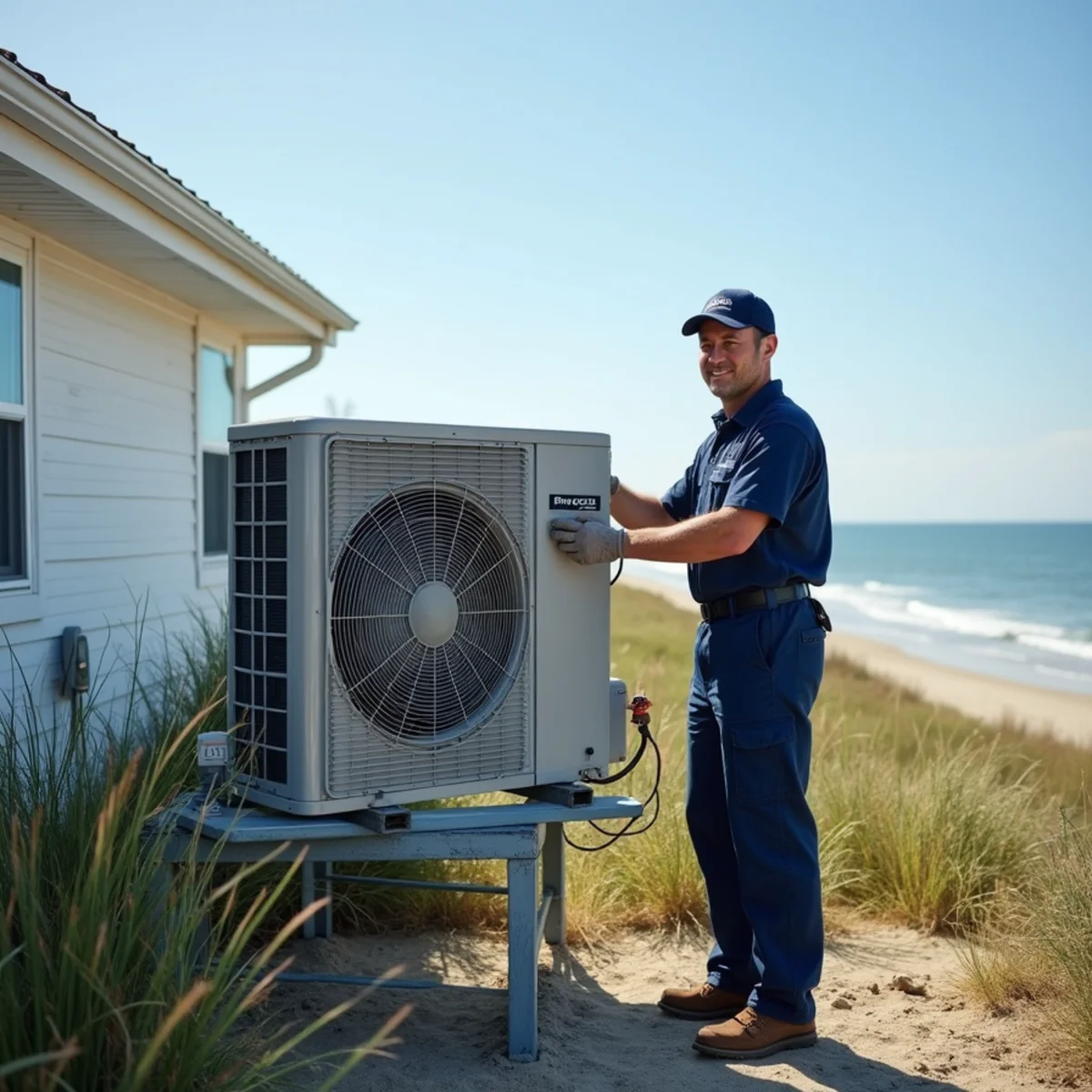
If you live near the water in Long Beach or anywhere else along Long Island's coastline, your HVAC equipment is fighting a harder battle than a similar system fifteen miles inland. Salt air accelerates corrosion, storm surge threatens flooding, and high humidity adds its own wear on components. None of this means coastal homes cannot have reliable, long-lasting systems — it just means the approach has to account for the environment.
We service a lot of coastal properties, and this is the practical guidance we give homeowners specifically because of where they live.
How Salt Air Damages HVAC Equipment
Salt in coastal air accelerates corrosion on metal components, particularly the fins and coils of outdoor condenser units, along with electrical connections and cabinet hardware. Left unaddressed, this corrosion reduces efficiency, shortens equipment lifespan significantly compared to inland installations, and can eventually cause refrigerant leaks at corroded coil joints.
Protective Measures Worth the Investment
- Choose coastal-rated or coated condenser units designed specifically to resist salt corrosion — this is a meaningfully different product tier than standard residential equipment.
- Position outdoor units away from direct wind-driven salt spray where site layout allows, or use protective screening.
- Rinse outdoor coils with fresh water periodically (check manufacturer guidance) to remove accumulated salt deposits.
- Apply protective coil coatings, available specifically for coastal HVAC applications, during installation or as a retrofit.
- Increase maintenance frequency compared to inland systems — twice yearly is a minimum near the coast, and some owners benefit from more frequent coil inspection.
Flood Risk: Elevation and Placement Matter
Long Island's coastal areas, including Long Beach, carry real storm surge and flood risk, and ground-level outdoor equipment is vulnerable during major storm events. Elevating outdoor condenser units on a stand or platform above typical flood levels for your specific property is one of the most effective, straightforward protective measures available.
| Risk | Protective Measure |
|---|---|
| Salt corrosion on coils/cabinet | Coastal-rated equipment, protective coatings, regular rinsing |
| Flood damage to outdoor units | Elevated platform or stand above local flood risk level |
| Storm debris impact | Secure mounting and, where practical, wind screening |
| Humidity-related indoor issues | Properly sized system with good dehumidification performance |
Humidity Control Is Its Own Challenge Near the Water
Coastal humidity levels run consistently higher than inland areas, and the EPA recommends keeping indoor humidity between 30-50%, and definitely below 60%, to prevent mold growth and dust mite proliferation. An AC system that is oversized for the space will actually struggle to dehumidify properly, since it cools the air quickly without running long enough to remove adequate moisture — proper sizing matters even more near the coast than it does inland.
After a Storm: What to Check Before Restarting Equipment
- Visually inspect outdoor equipment for physical damage, debris, or signs of water intrusion before restarting it.
- Do not restart equipment that was submerged, even partially, without professional inspection — internal electrical components may be compromised in ways that are not visible.
- Check for exposed or damaged wiring near the unit before restoring power.
- Have a professional inspection after any significant flood event, even if the equipment appears to be running normally.
Maintenance Schedule for Coastal Properties
We generally recommend coastal homeowners treat hvac-maintenance visits as slightly more frequent than the standard inland recommendation — closer to every four to six months rather than a strict twice-yearly schedule, specifically to catch salt-related corrosion early, when a simple coil cleaning or coating touch-up can prevent a more expensive repair down the line.
Choosing the Right System for a Coastal Long Beach Property
When installing new equipment in a coastal Long Island home, we factor in exposure direction, typical storm patterns for the specific property, and flood zone designation, not just square footage and standard load calculations. This extra layer of planning is exactly why an in-person, coastal-experienced assessment matters more here than in a typical inland installation.
Indoor Air Quality Considerations Near the Water
Coastal humidity does not stop at the outdoor unit — it affects indoor air quality too. Consistently elevated indoor humidity above the EPA's recommended 30-50% range encourages mold growth on surfaces, in ductwork, and even within the HVAC system itself, which can create musty odors and worsen allergy or respiratory symptoms for sensitive household members.
A properly sized and maintained AC or heat-pump system is your first line of defense here, but some coastal homeowners benefit from a supplemental dehumidifier integrated with the HVAC system, especially in below-grade spaces like basements that trap humidity more than upper floors. If you have noticed persistent musty smells or visible condensation on windows, it is worth having your system's dehumidification performance specifically evaluated rather than assuming it is simply an unavoidable part of coastal living.
Regular filter changes and coil cleaning play a role here too — a clean, well-functioning system dehumidifies far more effectively than one struggling with restricted airflow, which is one more reason coastal maintenance frequency matters as much for air quality as it does for equipment longevity.
Coastal HVAC systems need a different level of care than inland equipment, and the upfront planning pays for itself in equipment longevity. J&S HVAC Expert Inc. services and installs HVAC systems across Long Beach and the greater Long Island coast with this environment specifically in mind. Call (831) 461-3437 to schedule an assessment of your current system's coastal readiness.
Have a heating or cooling problem in the NYC metro?
J&S HVAC Expert is a licensed, bilingual HVAC contractor serving Queens and the surrounding area 24/7. Call for fast, honest service.
(831) 461-3437