
Problem-Solving
PTAC Units in NYC Condos: Repair, Replace, or Upgrade?
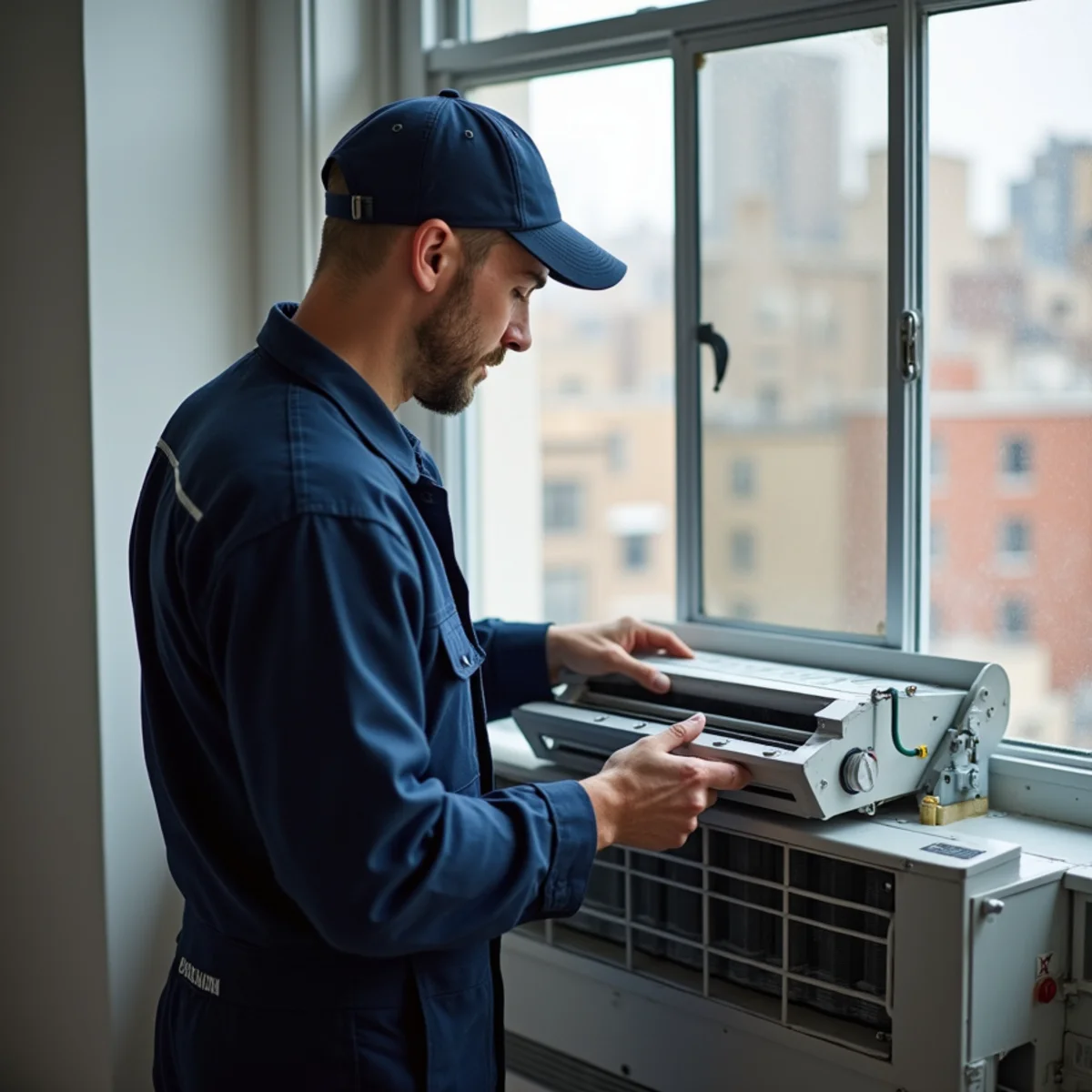
If you own a condo in a Manhattan high-rise built in the last few decades, there is a good chance you have a PTAC unit — that boxy through-wall system under your window handling both heating and cooling for the room. They are reliable workhorses, but they do not last forever, and knowing when to repair versus replace one is a question we field constantly.
PTAC stands for Packaged Terminal Air Conditioner, and it is the standard system in countless NYC condo and hotel buildings because it is self-contained, relatively affordable, and does not require central ductwork. Here is how to think through your options when yours starts acting up.
Common PTAC Problems
| Symptom | Likely Issue |
|---|---|
| Weak heating or cooling | Dirty filter/coil, low refrigerant, or aging compressor |
| Loud rattling or vibration | Loose fan blade, worn motor bearings, or mounting issue |
| Water leaking inside | Clogged condensate drain or improper unit pitch |
| Won't power on | Electrical/control board failure or tripped breaker |
| Short cycles constantly | Thermostat sensor issue or refrigerant problem |
When Repair Makes Sense
If your PTAC is under about 8-10 years old and the issue is mechanical or electrical — a fan motor, control board, or drain clog — repair is usually the right call. These fixes are typically affordable and can extend the unit's useful life by several more years without a large investment.
When Replacement Makes More Sense
PTAC units generally have a service life of around 10-15 years. Past that point, declining efficiency means you are often paying more in electricity to run an old, struggling unit than you would spend on a newer, higher-efficiency replacement over a comparable timeframe. If your unit needs a major repair — compressor failure, for instance — replacement is usually the more sensible move rather than investing heavily in an aging system.
The Upgrade Question: Is There a Better Option Than PTAC?
Some condo owners, especially those doing a broader renovation, ask whether they can replace a PTAC with a ductless mini-split system instead. In buildings where this is structurally and administratively possible, ductless can offer quieter operation, better efficiency, and more precise temperature control. However, this typically requires board approval and sometimes structural modification, since PTAC sleeves and ductless line-set penetrations are not interchangeable.
- Ductless heads are generally quieter than PTAC units, which some owners find noticeably more comfortable, especially in bedrooms.
- Ductless systems typically offer better efficiency ratings than standard PTAC equipment.
- PTAC replacement is usually simpler administratively since it uses the existing building sleeve.
- Ductless conversion is a bigger project requiring board sign-off and sometimes exterior work.
Cost Guidance
As a general, non-binding planning range, PTAC repair costs are usually comparable to standard ac-repair pricing — roughly $200 to $850 depending on the issue — while full PTAC replacement runs higher per unit depending on capacity and features. Always get a written quote that specifies whether it includes the sleeve, wall unit, and any disposal fees.
Maintenance That Extends PTAC Life
- Clean or replace the filter every one to two months, more often if you have pets.
- Have the coil cleaned annually — dust and debris buildup is a leading cause of reduced efficiency.
- Check and clear the condensate drain to prevent leaks and water damage to flooring or the unit below.
- Confirm the unit is properly pitched so condensate drains outward, not into the room.
- Schedule a professional inspection before each heating and cooling season transition.
Commercial Buildings and Multi-Unit Considerations
For condo boards and property managers responsible for multiple PTAC units across a building, a staggered replacement plan — rather than waiting for units to fail one by one — often makes more financial sense and avoids emergency service calls. We work with property managers on exactly this kind of planning as part of our commercial-hvac services.
What to Expect From a Service Visit
When we assess a PTAC, we check refrigerant levels, electrical components, drainage, filter and coil condition, and overall unit age before making a recommendation. We will always tell you honestly if repair no longer makes financial sense rather than billing you for a fix that only buys a few more months.
Efficiency Ratings Worth Understanding
When you do reach replacement, PTAC units are rated by EER (Energy Efficiency Ratio) and, on newer models, by combined heating and cooling performance standards. Older PTAC units in many pre-2010 buildings often carry noticeably lower EER ratings than what is available today, meaning a straightforward like-for-like replacement can still deliver a real reduction in your electric bill even without any other upgrade.
It is worth asking your contractor for the EER rating of any replacement unit being quoted, and comparing it against your building's current standard. Some buildings have updated their approved-equipment list to favor higher-efficiency PTAC models specifically because of resident feedback on energy costs, so check whether a better-performing option is already pre-approved before assuming you are limited to older specifications.
Whether your Manhattan condo's PTAC needs a quick repair or it is time to talk replacement options, J&S HVAC Expert Inc. gives you a straight answer based on the actual condition of your unit. Call (831) 461-3437 to schedule an assessment.
Have a heating or cooling problem in the NYC metro?
J&S HVAC Expert is a licensed, bilingual HVAC contractor serving Queens and the surrounding area 24/7. Call for fast, honest service.
(831) 461-3437